The OTT Numbers Look Great — So Is it Working?
Your OTT advertising dashboard shows 50,000 impressions last month. Your cost per thousand is under $25. The completion rate is 92%. Everything looks solid, right?
Except you can’t connect any of it to actual customer calls or revenue. You ask your vendor about attribution and they show you a spreadsheet of how many impressions ran with a 90% video completion rate. Meanwhile, you’re a home services company trying to figure out if you should renew next quarter.
Here’s what most business owners don’t realize: the OTT advertising strategy world is split between premium inventory that actually performs and bargain-basement inventory that generates cheap impressions on channels with smaller audiences. And your dashboard probably can’t tell the difference.
The Real Problem With Connected TV Reporting
The fundamental issue isn’t that OTT doesn’t work for home services businesses. It’s that most vendors prioritize metrics that look good in reports over metrics that predict customer behavior.
Consider this: your vendor can show you exactly how many times your ad played to completion. What they often can’t show you is whether those impressions happened on ESPN during primetime or on a free streaming channel showing 1980s game shows at 3 AM. Both count as “Connected TV impressions.” Both show up identically in your dashboard. But they’re not remotely equivalent.
According to DW Creative’s American Homeowner Media Research, 63% of homeowners watch streaming content in the evening. That’s your window. But if your vendor is buying the cheapest inventory possible to hit impression targets, you might be running dozens of ads to the same small audience — or worse, on platforms where engaged viewers are hard to find.
Premium vs. FAST Channels: Why Your OTT CPM Might Be a Red Flag
Premium inventory means ad placements on recognizable streaming platforms — Amazon Prime Video, Hulu, Peacock, Paramount+, Disney, etc. These platforms have real audiences watching real content. Your ad might run during a popular show or live sports. The CPMs (cost per thousand impressions) are higher, typically $35-$65, because the audience quality is genuine.
FAST channels are the free streaming equivalent of late-night cable filler. They’re apps you’ve never heard of, running content nobody specifically chose to watch, often on smart TVs where someone left the default channel running. CPMs can drop to $5-$15 because there is so much inventory and “relatively” few eyeballs.
When your vendor brags about a $20 CPM for “premium streaming,” ask exactly which platforms your ads are running on. Demand a platform-level breakdown. If they can’t provide it or they pivot to talking about total reach, you’re probably buying FAST inventory dressed up as premium.
What Good OTT/Connected TV Attribution Actually Looks Like
Real OTT attribution for home services businesses isn’t complicated, but it requires your vendor to do actual work instead of just showing you platform metrics.
Here’s what to look for:
Geographic correlation. Your OTT vendor should be able to show you impression delivery by ZIP code and compare it to call volume or web traffic from those same ZIPs during the campaign flight. If you ran heavy impressions in three specific neighborhoods, did calls or website visits from those areas increase during and immediately after the campaign? This isn’t perfect attribution, but it’s real evidence.
DW Creative uses Media Mix Modeling to isolate the actual contribution of each channel, including OTT, to customer acquisition. This approach accounts for all marketing variables simultaneously and can show whether your OTT spend is generating returns or just generating reports.
Household-level tracking. Some OTT platforms can connect streaming impressions to the same household’s web visits through IP matching or device graphing. If your vendor has access to this data, they should be tracking how many households that saw your OTT ad later visited your website. This is actual attribution, not guesswork.
Incrementality testing. The gold standard is running your OTT campaign in some markets but not others, then comparing performance. Did the OTT markets generate more calls, more website traffic, or more booked jobs than the control markets? Most small vendors won’t suggest this because it requires discipline and might prove their channel doesn’t work.
Questions to Demand From Your OTT Vendor
Before you sign another contract or approve another month of spend, ask these specific questions. Pay attention to how directly they answer.
What percentage of my impressions will run on premium platforms versus FAST channels? A real answer includes percentages and platform names. “We optimize across a mix of premium inventory” is not an answer.
Can you show me impression delivery by hour of day and day of week? If your ads are running at 4 AM on Tuesdays, you’re not reaching homeowners making improvement decisions. DW Creative’s research shows 63% of homeowners stream in the evening — that’s when your ads need to run.
How are you measuring attribution to customer actions? Make sure the answers are specific: Do they track website actions such as button clicks or form fills? Look for vendors that can close that loop of OTT/Streaming ad served to online action.
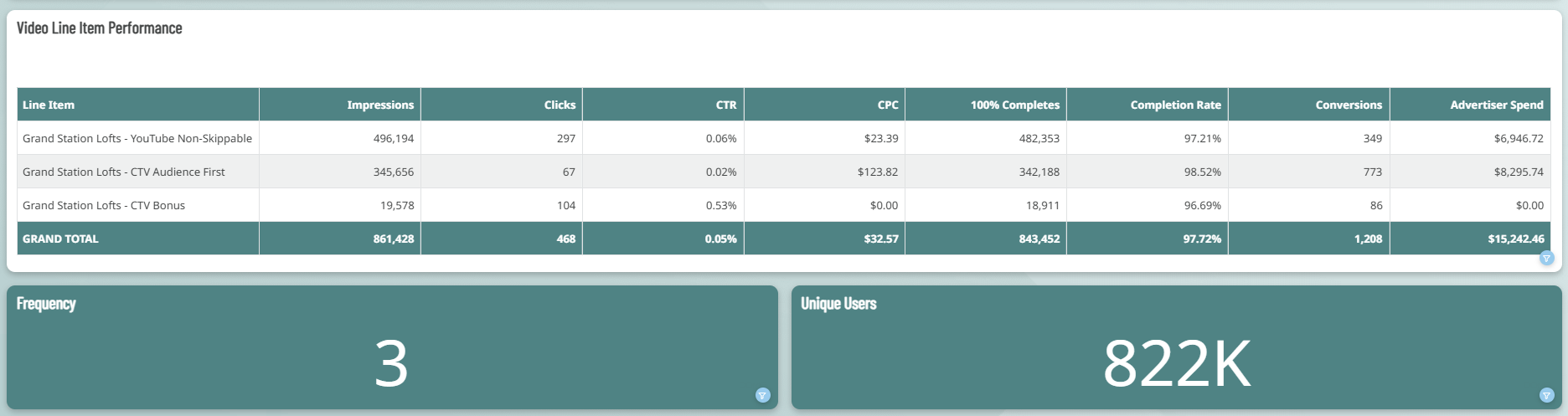
What’s the household reach versus frequency? Are you reaching 10,000 households three times each, or 1,000 households thirty times each? For home services, you want broad reach in your service area, not hammering the same small audience.
Can you provide a platform-level performance breakdown? Which specific platforms drove the most engaged viewers? Which ones generated website visits or calls? If they can’t break this down, they’re not actually managing your campaign — they’re just buying cheap impressions in bulk.
How to Evaluate OTT Performance Honestly
If you see a streaming ad on Amazon Prime, does the general public distinguish between an OTT ad and a local broadcast ad? No – it’s an ad just like any other video ad.
Stop celebrating vanity metrics. Impressions don’t pay your technicians. Completion rates don’t book jobs.
Here’s a realistic framework for evaluating whether your OTT spend is working:
First, determine the goal. If you’re expecting “direct response” from home services OTT advertising, expect to be disappointed. It’s an upper-funnel channel that can be more targeted, but supports an awareness/branding part of the journey, then those needing a new A/C right now.
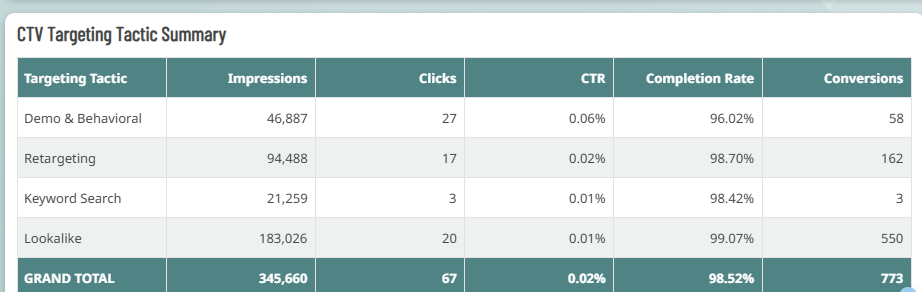
Second, be realistic about goals. If we can agree that OTT may not be the best direct response channel, what do we want it to do? What does drive awareness look like? A simple metric that can be tracked via some OTT vendors are website actions. OTT impressions are “Cross-Device” targeted and can be linked to website visits. Those web visits can in turn be tracked from UTM codes so you can determine
Other metrics may include overall organic or direct traffic lifts during an OTT campaign. The OTT created awareness – the prospect typed your name into Google to learn more.
Third, measure over a realistic timeline. Home improvement decisions aren’t impulse purchases. A homeowner might see your ad in September and call you in November when their furnace fails. Look at campaign performance over 60-90 days, not just the flight dates.
Fourth, watch for geographic clustering. If you’re running OTT in specific ZIP codes, are you seeing increased activity in those areas? Check website traffic by location, call sources by area code, and job bookings by neighborhood. Patterns matter more than individual conversions.
The Uncomfortable Truth About Cheap OTT
If your vendor is delivering OTT impressions significantly cheaper than market rates for premium inventory, you’re not getting a deal. You’re getting garbage inventory that counts as an impression but reaches nobody who matters.
According to DW Creative’s American Homeowner Media Research 2024, 78% of homeowners are likely to visit a company website when considering a home improvement project. That means your OTT advertising should be driving measurable web traffic. If it’s not, your impressions are running in front of people who aren’t your customers — or worse, aren’t real people at all.
The same research shows that 53% of homeowners are likely to choose a provider based on social media presence or recommendations. OTT can support that awareness, but only if the impressions are real and the targeting is accurate.
Next Steps for Evaluating Your OTT Investment
- Audit your current OTT vendor’s platform mix. Demand a detailed breakdown of where your impressions actually ran. If they can’t provide platform-level reporting, find a vendor who can.
- Implement geographic tracking. Use unique landing pages or call tracking numbers for OTT-heavy ZIP codes. Compare activity in those areas to control areas without OTT spend.
- Measure Web Activity Trends. Stop measuring success by CPM or completion rate. Measure how prospects live in the real world – they see your OTT ad(s), then visit a website to learn more, maybe even schedule an appointment or watch a few videos. Reputable OTT/Streaming vendors should be able to offer these tracking mechanisms. If not, find another vendor.
- Ask your vendor about incrementality testing. Run OTT in half your service area for 60 days while holding the other half as a control. Measure the difference in call volume, web traffic, and booked jobs.
- Review campaign delivery by time of day. Make sure your ads are running when homeowners are actually watching, not just when inventory is cheapest.
The DW Creative Perspective
OTT is a powerful awareness channel — people are watching streaming content to be entertained, not to shop. That’s not a weakness, it’s just the reality of how the channel works, and smart OTT strategy accounts for it. Where OTT earns its place in a media mix is in precise audience targeting and the ability to measure downstream web activity from impressions — but only when you’re working with vendors who provide that level of transparency. We’ve walked away from vendors who couldn’t show us exactly where ads ran or connect impressions to measurable behavior. If your OTT partner isn’t willing to do that, they’re selling you reporting, not results.
DW Creative is an agency built on evidence, not instinct. If you want help evaluating your current OTT performance or building a streaming strategy that connects to actual business results, schedule a fit call with our team.
Related Articles
If you want to go deeper on this topic, we recommend the following articles: