You’re doing good work. Your customers say so. But when you look at your competitor’s home services marketing down the road, it feels like they’re everywhere — their trucks, their ads, their name coming up in every conversation. How are they so much bigger when you know your work is just as good?
Here’s what most home services owners miss: your competitor doesn’t look bigger because they’re better. They look bigger because they’ve been consistently visible longer than you have. That’s it. Brand recognition isn’t about quality — it’s about repetition over time.
Why Consistency Beats Intensity Every Time
Most contractors approach marketing like they approach a big job: go hard for a season, then pull back when things get busy or cash gets tight. You run ads in spring, disappear in summer, come back in fall. It feels logical — why spend money when you’re already booked?
But brand recognition doesn’t work that way. According to DW Creative’s American Homeowner Media Research, 38% of homeowners cite company reputation as the top factor when hiring a contractor. Reputation isn’t built in bursts. It’s built through steady, repeated exposure that makes your name familiar before someone needs you.
When you go dark, you’re not just pausing your marketing. You’re letting your competitors own the mental real estate you spent months building. And when you come back, you’re starting over — not picking up where you left off.
Share of Voice Predicts Share of Market
There’s a concept in advertising research called “share of voice” — the percentage of total advertising in your market that belongs to you. Multiple studies across industries show that share of voice strongly correlates with market share over time. If you own 20% of the advertising impressions in your market, you’ll trend toward 20% of the available business. “Reality in Advertising,” from one of the OG Mad Men, Rosser Reeves, takes a scientific approach to mind share.
Your competitor who looks bigger? They probably own a larger share of voice than you do. Not because they spend more in any given month, but because they’re present more consistently across more channels over more time. They’re in the local news rotation. They sponsor the high school team. Their trucks are branded and visible. Their website ranks because they’ve been publishing content for years. They show up in social feeds because they post regularly.
DW Creative’s research found that 78% of homeowners use online research as a top source for home improvement decisions. Your competitor isn’t winning because they made one brilliant campaign. They’re winning because they show up in all those places, all the time.
The Compounding Effect of Brand Consistency
Here’s the uncomfortable truth: brand recognition compounds like interest. Every impression builds on the previous one. A homeowner sees your truck on Tuesday, your ad on Thursday, your sign in their neighborhood on Saturday. By the time they need your service three months later, your name feels familiar. They can’t remember where they saw you, but they “know” you.
That compounding effect takes time to build. Industry benchmarks suggest it takes 6-12 months of consistent presence before most consumers can recall a brand unprompted. Your competitor has been at it for three years. You’ve been inconsistent for 18 months. They don’t have a better product. They have more accumulated impressions.
When you go dark for a quarter, you don’t just lose three months of impressions. You break the compounding curve. You’re back to building awareness from a lower baseline. Meanwhile, your competitor kept going, and their curve kept climbing.
How to Audit Your Competitor’s Real Presence
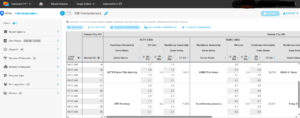
Stop guessing. Invest. We suggest purchasing a report from Media Monitors, a media auditing company in auditing advertising impressions. We believe they are the most accurate when it comes to traditional media such as competitive spending for Broadcast TV, Radio and Print.
Purchase a “competitive spending report” for a calendar year in your category (home services contractors, etc). Not only will they aggregate total spending, but you’ll start to understand what stations and dayparts the competition buys. This not only allows you to understand share of mind, but also be nimble to view opportunistic media not heavily present by the competition, but you know reaches your target audience.
What Consistent Presence Actually Looks Like
Consistency doesn’t mean doing everything. It means doing a few things reliably, month after month. For most home services businesses, that means:
A baseline digital presence: Your website stays current. Your Google Business Profile gets regular posts and photos. You’re active on one or two social platforms where your customers actually spend time — according to our research, 78% of homeowners use Facebook regularly, so that’s usually the anchor. You’re running some level of paid search year-round, even if you scale spend up and down seasonally.
Continuous local visibility: Your trucks are always branded and clean. You leave yard signs at every job. You maintain at least one steady traditional channel — whether that’s direct mail, local radio, or community sponsorships — that keeps your name in circulation even during your off-season.
This doesn’t require a huge budget. It requires discipline. The HVAC company that looks bigger than you probably isn’t spending twice as much, but they’re spending it every month instead of going all-in for three months and disappearing for six.
Patience as a Competitive Strategy
Most contractors quit their marketing right before it starts working. They run ads for 90 days, don’t see a massive spike, and pull the plug. Meanwhile, the competitor who looks bigger kept going for 24 months and is now reaping the compounding returns.
DW Creative’s Media Mix Modeling work shows that marketing effects often lag spend by 3-6 months. You’re not just paying for this quarter’s leads. You’re building the brand recognition that generates referrals and organic search traffic two years from now. The competitor who dominates your market understood this. They treated marketing like a long-term asset, not a short-term expense.
If you want to look bigger than your competitors, you need to think in years, not quarters. Pick your channels. Commit to consistent spend. Measure quarterly, not weekly. And don’t go dark just because you got busy.
Next Steps for Competitive Marketing in Home Services
- Invest in a Media Monitors Competitive Spending Report
- Calculate your current share of voice and identify 2-3 channels where you can build consistent presence without overextending your budget
- Establish a 12-month baseline marketing budget that maintains presence year-round, even if you scale certain channels up and down seasonally
- Track brand recognition quarterly by asking every new customer how they heard about you and whether your name was already familiar when they started their search
- Commit to measuring success in 6-12 month windows instead of 30-60 day sprints, understanding that brand recognition compounds over time
The DW Creative Perspective
At DW Creative, we use share of voice analysis and comScore media consumption data to help home services businesses understand their real competitive position — not based on gut feel, but based on measurable media presence across paid, owned, and earned channels. Our Media Mix Modeling approach quantifies how consistent presence drives long-term brand equity, helping owners make evidence-based decisions about where to maintain baseline spend versus where to scale seasonally.
DW Creative is an agency built on evidence, not instinct. If you want help auditing your competitive position and building a sustainable media strategy that compounds over time, schedule a fit call with our team.
If you want to go deeper on this topic, we recommend the following articles: